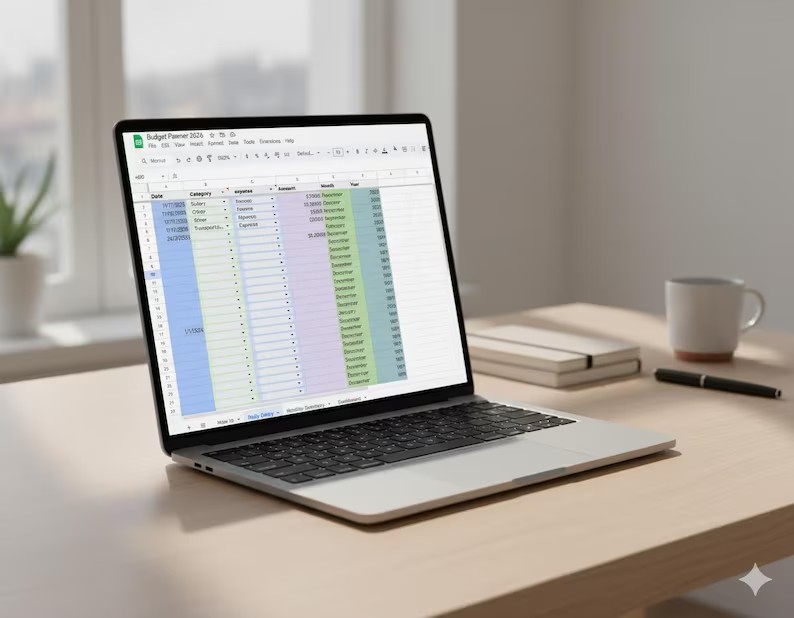
I started keeping a spreadsheet in February, not because I had a problem but because I had no idea what I was actually spending. My bank statement said one thing, my memory said another, and the gap between the two was embarrassing enough that I wanted to see it properly.
The rules were simple. Every session got a row. Date, time I started, time I stopped, which site, how much went in, how much came out, and one word for how I felt when I closed the tab. I opened accounts across four different operators over that period, rocketplay among them, mostly because I wanted to compare how long withdrawals actually took rather than how long they claimed to take. Six months later I have 148 rows and a much clearer picture of my own habits than any responsible gambling pamphlet ever gave me.
The first thing that jumped out had nothing to do with games or odds. It was time of day. Sessions I started before nine in the evening averaged 34 minutes and finished within budget almost every time. Sessions I started after eleven averaged 71 minutes and accounted for nearly every top up I made. Same games, same sites, same person. The only variable was that late at night I was tired, and tired me is much worse at leaving.

I did not expect that. I assumed my problem, to the extent I had one, would turn out to be some specific game with a hook in it. It was not. It was the clock.
The second pattern took longer to see. I had assumed bigger deposits gave me longer sessions, which is technically true, but not proportionally. When I put in $30 I usually played until it was gone and then stopped. When I put in $150 I played until it was gone and then, about a third of the time, put in more. Something about the larger number made me treat it as an investment I had to protect rather than money I had already agreed to lose. Chasing did not start with a loss. It started with the size of the deposit.
The withdrawal experiment was the part I found most useful, and it is the part almost nobody bothers to test before they need it. I withdrew small amounts from each site deliberately, sometimes as little as $40, just to time the process end to end. Three of the four paid within the window they advertised once verification was done. The fourth had a habit of asking for one more document every time, which is a well known stalling tactic and the reason I stopped using it.
Here is the thing I wish I had known earlier: get your ID verified on day one. Every delay story I have heard from friends comes down to someone trying to withdraw a decent win from an account that was never fully verified. The casino then asks for documents at the worst possible moment, the player reads it as the site refusing to pay, and by the time it is sorted out everybody is furious. Upload your licence and a utility bill the day you sign up, when there is nothing riding on it. It costs you five minutes and removes the single most common source of grief.
The mood column turned out to be the most valuable one, which surprised me because I nearly did not include it. Reading back through six months of one word entries, the sessions where I wrote “bored” were disproportionately the ones where I lost the most. Boredom is not a good reason to play, and it is a terrible state to play in, because a bored player raises bet sizes to make something happen. Sessions where I wrote “fun” were almost all short.
I also learned that I remember wins far more clearly than losses, which everybody says and nobody believes about themselves. My honest guess in July, before I checked the sheet, was that I was roughly even for the year. I was down about $640. Not catastrophic, less than I have spent on far worse things, but nowhere near even. Memory is not a ledger. If you want to know where you stand, write it down, because your recollection will quietly round in your favour every single time.
Some smaller things that came out of it. Bonuses were mostly not worth claiming for how I play, because I tend to play in short sessions and a 40x wagering requirement is not something you clear in forty minutes. I now decline them by default and only take one when I plan a longer night. Autoplay cost me money, reliably, because it removes the small friction of deciding to spin again, and that friction was the only thing keeping my session counts honest. Deposit limits, once I set them, quietly solved the late night problem without any willpower on my part, which is the whole point of setting them when you are calm rather than trying to be disciplined at midnight.
I am not going to pretend the spreadsheet turned me into a winning player, because that is not a thing. The house edge does not care about my data collection. What it did was turn a vague sense of unease into specific, boring facts I could do something about. I now play earlier in the evening, in smaller amounts, without bonuses, with a deposit limit, and I have a running total I cannot argue with.
If you play regularly and you have never tracked it, do it for a month. You do not need anything sophisticated, a notes app works. Log the amount in, the amount out, and one word about why you opened the site. A month is enough to show you your own patterns, and they will not be the ones you expect.
And if what you find looks worse than you thought, that is information too. Every Australian operator has deposit limits, cooling off periods and self exclusion sitting in the account settings, and Gambling Help Online answers on 1800 858 858 at any hour. Using either of those is not a defeat. It is the same instinct that made me open the spreadsheet in the first place, which is wanting to know where I actually stand.
Play only if you are over 18, and only with money you are genuinely fine with losing.